

Why Trade Events Still Matter

A Reflection from a Hardscape Workshop
In the landscape profession, some of the most valuable lessons are not learned in an office or from a set of drawings. They are learned in the field—watching materials being installed, asking questions, and exchanging ideas with the people who build the landscapes we design.
This past Friday I had the pleasure of participating in a hands-on hardscape workshop at the LSU AgCenter Research Station in Hammond, Louisiana. Scott Anderson of Natural Paving USA generously donated the materials and led instruction on installation techniques for his natural stone pavers. Dr. Damon Abdi of the LSU AgCenter and I also contributed to the instruction, guiding participants through the installation process while discussing practical considerations related to design, material selection, and construction methods.
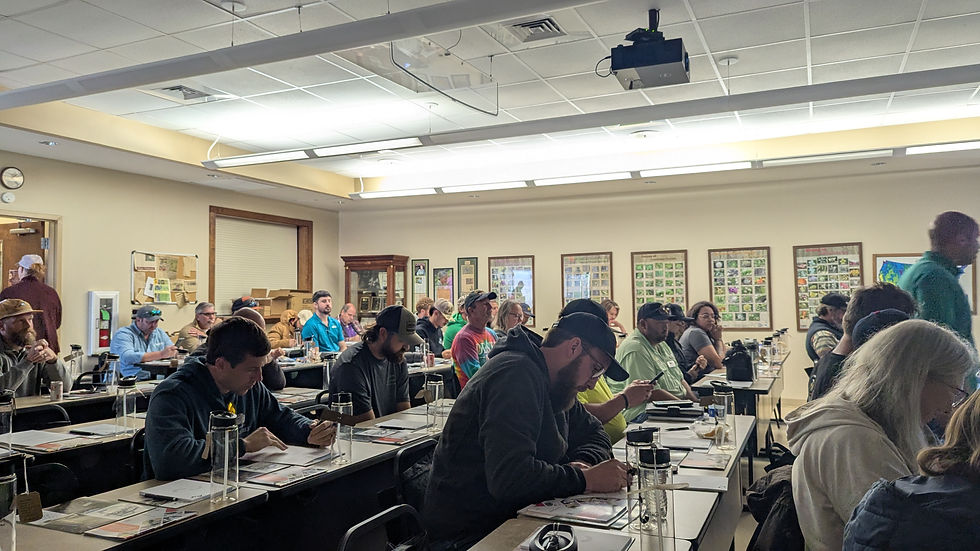
The program combined classroom instruction with live demonstration. Participants worked directly with the stone and installation materials while learning the proper sequencing of base preparation, placement, and finishing techniques. Bartell Global also demonstrated several pieces of equipment commonly used in hardscape construction, including plate compactors and masonry saws.
The workshop was well attended by landscape contractors, which was encouraging to see. However, I was somewhat surprised—and admittedly a bit disappointed—that relatively few designers or landscape architects were present, even though continuing education credits were available for license holders.
That observation led me to reflect on something I have noticed throughout my career: many professionals in related disciplines miss valuable opportunities to expand their knowledge and professional networks simply by not attending industry trade events.
To be fair, stepping away from the office or job site is not always easy. Schedules fill quickly, projects demand attention, and it can be difficult to justify time away from billable work. But in my experience, the benefits of attending these events far outweigh the temporary inconvenience.
One of the greatest advantages of workshops like this is the opportunity to see materials and techniques demonstrated in real time. Plans and specifications are essential tools, but they can only communicate so much. Watching the preparation of a base layer, the placement of stone, and the use of compaction equipment provides practical insight that is difficult to capture on paper.

For designers and landscape architects, this kind of exposure reinforces the importance of designing with constructability in mind. Understanding how materials behave during installation helps inform decisions about layout, detailing, and specification. Even small observations—how installers handle materials, how tools are used, or how adjustments are made in the field—can influence future design work.
Contractors benefit as well. Trade events create an opportunity to exchange techniques, compare approaches, and refine installation methods. The landscape industry has always evolved through shared experience, and these gatherings allow that exchange of knowledge to happen naturally.
Equally important are the conversations that occur around the demonstrations themselves. A brief discussion with a supplier may introduce a new material. A conversation between a designer and a contractor may lead to a future collaboration. These informal exchanges are often where the most valuable learning takes place.
Landscape work rarely happens in isolation. Designers, contractors, growers, manufacturers, and suppliers all contribute to the success of a project. Trade events are one of the few environments where these groups can interact directly and learn from one another.
Throughout my career in the design-build sector, I have seen firsthand how valuable that cross-disciplinary understanding can be. The most successful projects tend to occur when designers understand construction and contractors understand design intent. When both sides appreciate the challenges faced by the other, the result is a smoother process and a better final product.

Looking back on the workshop at the Hammond Research Station, what stands out most is not just the technical instruction or the equipment demonstrations. It is the simple fact that a group of professionals gathered together to share knowledge and experience. Contractors, educators, manufacturers, and designers all contributed to the conversation in different ways.
Professional development does not always occur in a classroom or behind a computer screen. Sometimes it happens beside a stack of stone, with a group of people asking questions, sharing experience, and learning from one another.
In my view, that is time well spent—and one of the reasons trade events still matter.
~ Eric


Comments